

Gail
When my brother Brian was about ten years old he jumped on his bicycle and took off down the street from our house in Webster Groves and headed westward. His destination was pretty far for anyone on a bicycle and simply unthinkable for someone his age. He wended his way down neighborhood streets, busy roads, and I suspect but hope not interstate highways. I have to assume that his only navigational aid was an inherent and unquenchable passion for something that could–then–only be found in the more permissive environs of Fenton, MO.
After a journey of which only he knew the length he successfully arrived at his destination. To him, this destination was more important and more exciting than just about other place on earth. In fact, it was a place that he obsessed about for his entire life. It was Molly Brown’s Firework stand, and it was—to my brother—his own mecca. And so this ten year old little boy parked his bike and began wandering the aisles of fireworks, shopping for bottle rockets, smoke bombs, and the now illicit M-80’s. Probably almost immediately he’d drawn the attention of the firework stand’s staff.
To my brother, the entire affair was on the up-and-up. He didn’t bother anyone to get him there, and he had his own money to spend that he’d earned cutting grass and selling his share of the produce from a family garden. When Brian arrived at the register, the man asked how he got there. He felt he should to call home.
When Gail picked up the phone she’d known Brian was gone because it was not uncommon for her children to roam the neighborhood and spend afternoons playing outside and visiting with neighbors.
The man working at Molly Brown’s filled her in on the rest. He told her all about how this little boy had ridden all that way to buy fireworks on his own.
With only a moment of hesitation, Gail told the man that he really ought to sell Brian the fireworks. After all, it was his money, and he’d gotten himself there. He’d earned it.
Gail was like that. She was not what anyone could call an overprotective parent. She was certainly never an overbearing parent. Her role was rarely to scold, and never to criticize or tell us our direction. She was, for Aimee, Brian, and I, the greatest possible cheerleader to our lives. She encouraged our whims and adventures, and counseled us during our misadventures.
She certainly encouraged my own adventures.
Gail had so many of her own adventures. She was a master at the wheel of a Massey Ferguson tractor and could cut grass on the steepest and most dangerous Ozark Hills. She stood on a glacier near the summit of The Eiger in Switzerland. She rode front seat in a two-person glider and retold the story a hundred times about how she pulled the release lever to the tow-plane. I don’t think she ever missed a St. Patrick’s Day in Dogtown and always enjoyed the festivities in moderation so that she could look after her friends and family.
She loved Ireland, visited twice, and found many, many friends there and against the wishes of a pub full of locals, she and Mel took a shortcut to their B-and-B through a cemetery in the middle of the night. For those of you who are whiskey drinkers—she was literally a card-carrying member of the Tennessee Squire Association. She traveled the Chilkoot Trail in Alaska to see first hand how Klondikers reached their gold fields. She birthed my sister Aimee in a Volkswagen Beetle. She floated the Danube River, and on that trip, made lifelong friends with people from all over the world who contacted her constantly.
And she had many, many more than those…
Though she was a permissive parent—what people these days call Free-Range parenting, she was never an inattentive parent. She was always certain to provide us with all of the things we needed, most of what we wanted, and nothing that we shouldn’t have.
But never was her dedication more apparent than the time following my brother’s brain injury. Immediately following… Gail and Mel flew directly to Florida to be with him and Gail spent days and days near his hospital bed. Though he was in a coma, she talked to him constantly, rubbed his feet, and gave him that encouragement that always seemed to come naturally to her. And when Brian slowly began to regain his consciousness, both Gail and Mel put their lives on hold to see to his every need and to do everything possible to make him comfortable. I am certain there was no way Brian could have been more comfortable.
Gail and Mel’s dedication to Brian’s care was, for me, indescribable. Truly there is no way I can share with any sort of justice how she and Mel provided for Brian’s comfort and happiness. And this effort I have seen matched only by Mel’s own dedication to Gail during the final months of her life.
I’ve only shared with you a tiny piece of what Gail was to me and through a lens that is only my own. I know that, to all of you, she was many more things — that she influenced your lives in ways I do not yet understand. During the last few days people have shared many stories about Gail that I never understood through my own perspective. Please keep sharing those stories with me, and please be patient when I share my own. I have many.
Finally, I think it is important to let everyone know that Gail’s final days were not in misery, but in comfort and surrounded by friends and family. She never lost her humor. The last few months I had the privilege of helping put Gail to bed at night. I would help her stand from her wheelchair to move to bed. After dinner one night recently, she felt badly because she didn’t have the strength to help me. I showed her a trick in which I could lift her with only a little strength and put her right into the bed without her working in the least. As always she thanked me and she encouraged me — that was a great trick!—she said. I told her—Well, I didn’t just fall off the turnip truck. She patted my arm, and smiled, and replied– No, but you smell like you’ve just fallen off the garlic truck.
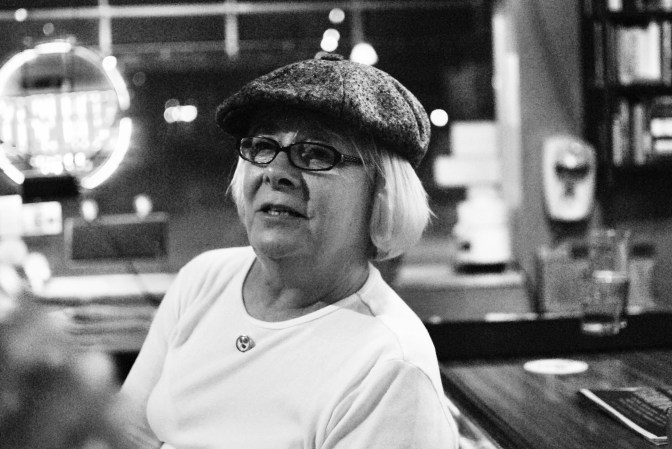
Mel
I have spent a sizable portion of my life now as a teacher. With several years at it, I find myself worrying less and less about what I am going to teach next. Instead, I now look back on the experiences that have informed my teaching. When I think about my most influential experiences, the moments that have become the composite order of my life philosophies, I find that almost invariably my father is somehow involved.
If I am to choose one moment that defines our relationship, and if I am to explain how he has influenced my approach to teaching, well, this will be the easiest thing I have to say all day. In fact, I’ve told this story a million times, and please forgive me for telling it again.
When I was seventeen years old I’d saved up the money to purchase a car. Like most new experiences in my life, I felt more worry about the matter than anything else. I was truly overwhelmed and did not know how or where to begin. And as with other similar instances, I went to my father for counsel. We began a dialogue on the matter of what sorts of cars would be most beneficial, which ones to avoid, how to spot a scam, and so on. He explained these things to me rationally and thoughtfully — and not all at once. It was an ongoing dialogue that lasted many days in which he would share his thoughts with me and I would be left to ruminate for a while. And over the course of these days I found that I was finding relief from my trepidations – with one exception, however.
My father believed that I should purchase a car with a standard transmission. His reasons were valid. However, if there was one thing I was quite certain about from the beginning, it was that I would purchase an automatic. Watching someone drive a stick was like watching someone play the violin – none of the movements made by the operator made any sense to me – it was all entirely a mystery. In our conversations he would explain why driving a stick-shift might be best, and I would leave to ruminate and dream up reasons why I should not. I simply did not have the confidence. Every time I returned to speak with him he rationalized calmly with me, then encouraged me, and he let me know that he had no doubt I was capable of learning. In return I dreamed up more and more fictions for why an automatic transmission would be best, expecting that he would eventually relent. He never did. He could see in me that self-doubt had become in control of my decision-making. So he changed his approach. One day I arrived home from school and he told me that he’d found a great car and that we should go look at it. Oh?! I asked. This seemed sudden to me and I was immediately suspicious. I asked several questions about the car so that I might, in an oblique fashion, find out the status of the transmission. Mel was two steps ahead of me and answered with only vague, and equally oblique answers.
Of course when we arrived I looked first between the driver and passenger seats and of course there was the offending stick-shift. I grumbled and protested and Mel seemed hardly to hear me before the car’s owner walked out from his home.
The car belonged to a Bosnian war refugee. Hostilities in his country had mostly abated and he and his family were free to return to their home safely. He was in high spirits, visibly happy that they would be leaving soon. And how could we not be happy for him? He had no need for the car and would let me have it for a song. Smiling, he said to me — The car would suit you. I certainly don’t want to take it with me. It was one of those odd moments in life in which the decision was entirely mine, but really there was no decision to be made.
How could I pass up such a great deal? And how would I actually learn how to use this thing?
Shortly thereafter Mel took me to a cemetery for my first lesson. Under his direction, I would for the first time drive a standard transmission. By now I had abandoned my oblique approach in talking about the car because I felt I had been hornswoggled. I voiced my concerns, one after another, and he simply and calmly reassured me that I was ready to do this. In the middle of that cemetery parkway I sat in the driver’s seat, and my father in the passenger seat. He talked me through how the clutch worked in relation to the stick. He then gave me the order of operations in going and stopping. He gave me contingencies and directions in case of an emergency.
He said to me — Now let me see you do it with the motor stopped. In the silent car I went through the motions of depressing the clutch, shifting to first, and so on. He asked me to repeat the action and I did. It’s just that simple, he said. He then opened the car door and got out. Where are you going? I demanded. I am going for a walk, he replied. You’ll find me when you are ready, and he turned his back to me and wondered off.
I sat in the car alone. I knew what to do. I started the car and concentrated and slowly began and the car lurched and stalled. I sat there for a moment and tried again, to the same result. By this time Mel was too far for me to call to him, and so I started the car and tried again.
About a half an hour later I found him on the other end of the cemetery walking with his hands in his pockets reading the various gravestones. I, driving the car, pulled up next to him, and without a look of any sort of surprise he opened up the passenger side door and got in. Now take me home, he said. He sat relaxed in his seat and we left for home.
In looking back I know that Mel was a master teacher. He knew when it was important to give me choice, and when I needed firm direction. He knew how to bolster my confidence and, when my confidence failed me, to then push me beyond my comfort zone. He knew how to instruct, and how to tell when the instruction had hit home. He knew when to observe and when to leave me alone so that I could practice and fumble and make mistakes without the frustration of someone watching over my shoulder. He knew when to trust me, and he knew I would eventually use what he taught me to find him in that cemetery.
That was the first of only two lessons in driving a standard transmission. Of course there would be so many more things that he would teach me… and I am deeply sad in the thought there was so much he yet had to teach.
Years later he talked me into buying an extremely cool 1979 MG Midget. This was his way of steering me away from getting into the dangerous hobby of motorcycles. As I’ve said, he knew when to trust me, but he also knew when there was something for which I am not quite ready. There was an outstanding deal with a rebuilt motor and new transmission. It had Monza Exhaust and Weber Carburetors and the owner, this time a Serbian immigrant and mechanic, was going to let me have it for a song.
Mel and I could not wait to test drive it though the experience was oddly frustrating – nothing seemed to work properly. I pulled away in first gear well-enough but I could not find second. I was working the clutch and the stick-shift as I always had since that day in the cemetery, but it just wasn’t coming together. Over the roar of the engine and the shuddering and lurching of the car, my father said calmly and quietly, I am going to have to teach you how to double clutch, it’s simple. I looked at him incredulously and shouted back — How to what?!


 Gentleman Afield
Love this, Kevin! And what a great service! So many great memories. We’ll keep in touch.
LikeLike
Thank you for those really good notes and stories about your parents. Wish I had known them.
LikeLike
There is love in each word. I’m so glad Gail, Mel and Brian were a part of my life and to see the strong bond that existed among all of you. Marti
LikeLike