
A Short History of Skiing
The fall leaves, still clinging to their branches, have only recently begun their change to the brief and brighter stage of their life cycle. However, in large parts of the US, the specter of winter has already begun to darken the skies and lighten the surface of the earth. The Northeastern United States now finds itself buried beneath heaps of snow — prematurely, many would say — and frustration and misery abounds. However, not all regard winter storms with ire. What child would turn her/his nose up at a day off of school to sled and throw snowballs? Teachers, I am sure, listen just as carefully to the morning school closings, hoping and praying for a day’s reprieve. Is there a puppy on earth that doesn’t live to romp in the deep drifts of a fresh snow? However, I think no one looks forward to the first fall of snow more than a skier.
A gentleman should welcome snow and, at least once, give the exhilarating sport of skiing a try.
Hopefully my photographic history of skiing will inspire you ::
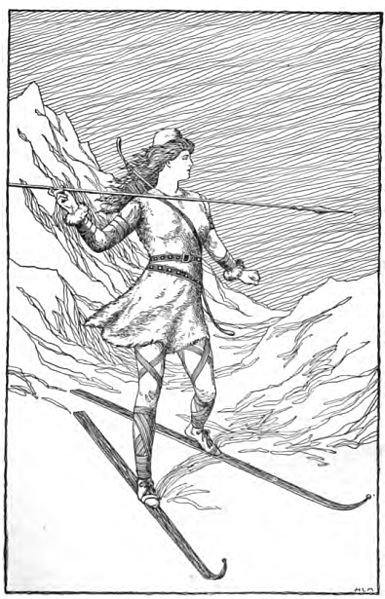
The earliest history of skiing might begin with Skadi, the ancient Norse goddess of skiing and hunting.
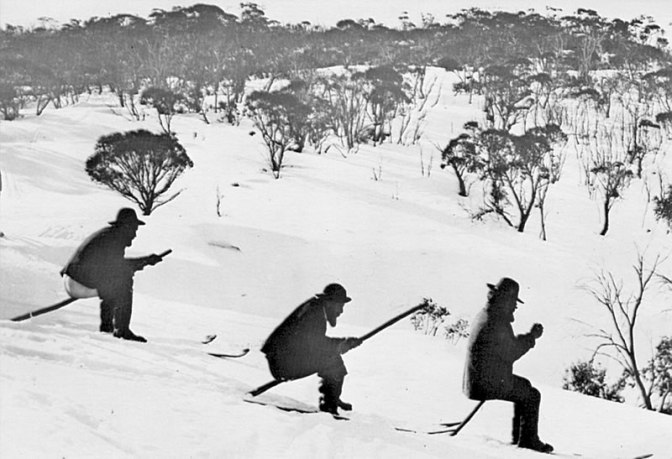
The first organized club for skiing was located in the unlikely region of New South Wales Australia. In 1861, the members of the Kiandra Ski Club introduced unorthodox, though effective, techniques.
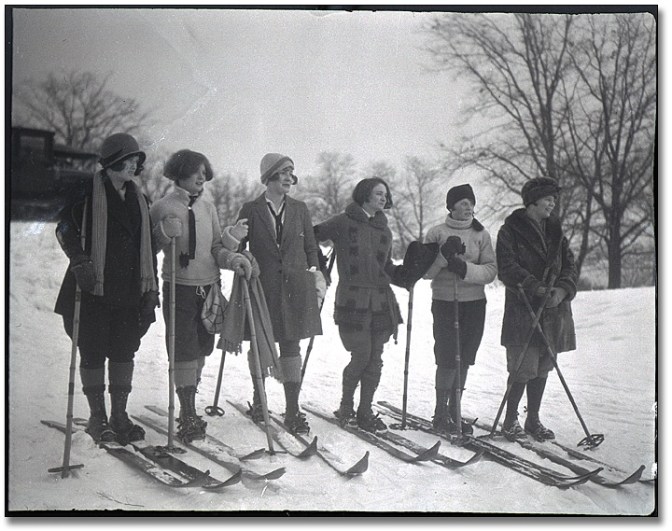
Skiing is a sport that seemed to, very early on, break gender barriers. These Edwardian women show that women’s ski fashion kept pace with their adventurous spirit.
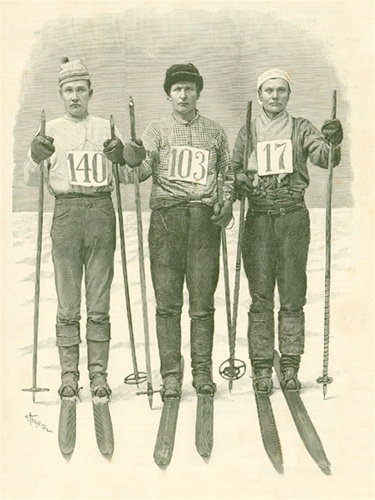
By the end of the 18th century, modern ski equipment allowed enthusiasts to reach speeds so great that racing was a natural result. Switzerland, Austria and Slovenia became meccas for downhill racing.
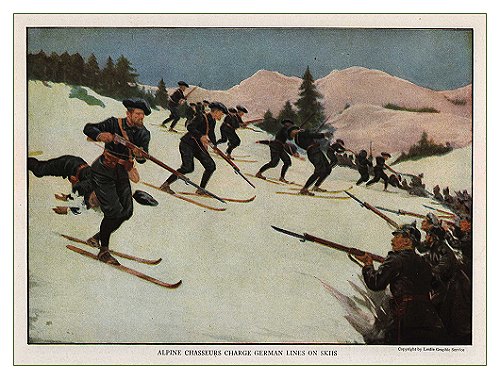
During The Great War, Alsatian soldiers who inhabited the Vosges mountains in eastern France wore bright blue tunics, large black berets and charged into battle on skis. Frightened Germans nicknamed these elite mountain troops the “Blue Devils,” the namesake of Duke University’s mascot.
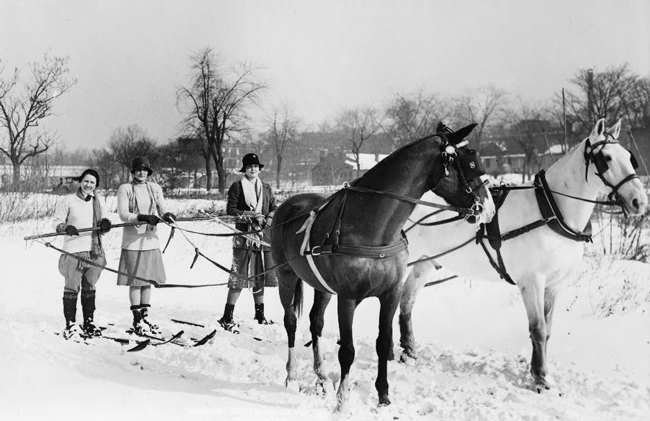
In places like Minnesota, where there is adequate snow but inferior mountains, skijoring has become a popular sport. Propulsion is gained through snowmobiles, trucks, and dogs. However, equestrian skijoring is by far the most elegant.
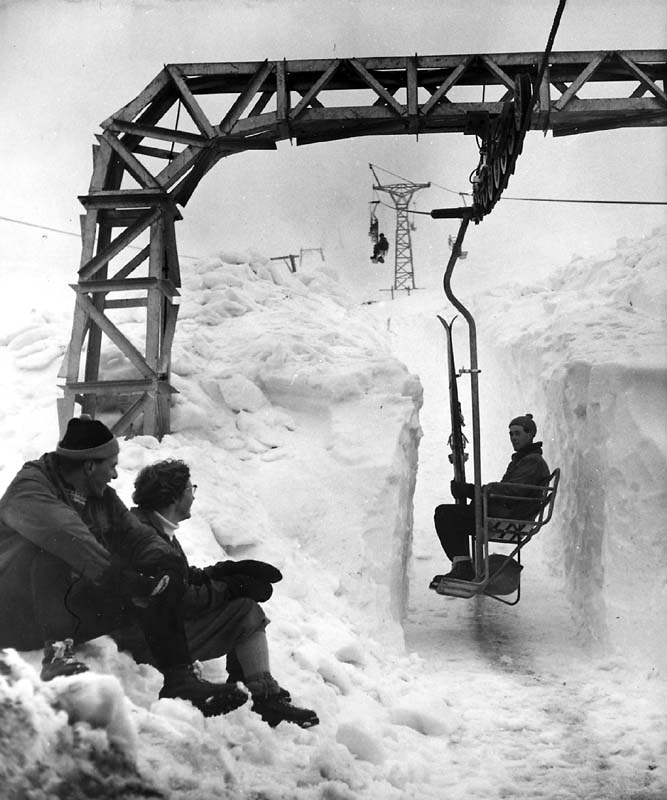
The first ski chair lift was built in Sun Valley, Idaho in 1936. The new mode of upward travel revolutionized the sport that, until then, required undue exercise to the top of the mountain. This early model underestimated the winter snowfall.
In 1970, Slovenian ski jumper Vinko Bogataj went down in history for his ill-fated attempt in Oberstdorf Germany. The video of his crash became known as The Agony of Defeat, which served as part of the opening of Wide World of Sports.
The crash left Bogataj with no serious injury. He currently lives a quiet and happy life in Slovenia.
Next week I will share the story of a gentleman who chose to ski only where eagles my dare.
* * * * *
For further reading on how skiing might change a gentleman’s life, I recommend Seven Years in Tibet by Heinrich Harrer, which was published in 1952.

 Gentleman Afield