

There is something uniquely romantic about shouldering a rucksack covered in patches, boarding a crowded train, and venturing out to cities and nations not yet explored. This type of travel — commonly called hostelling — is traveling with a purpose, with the interest in meeting people with different languages, different homes, and different customs. Though youth and elder hostelling is now quite common, the origins are somewhat obscure to most gentleman.
The hostelling movement began in the early years of the 20th century, in the mind of a German educator. Richard Schirrman conceived hostelling in 1912 as a response to the effects of the industrial revolution on German youth. He thought young people should have the opportunity to leave the smog and filth of city life and retreat to the more healthful environs of the German countryside. To facilitate this travel, Schirrman began a system of hostels that allowed people to walk and bicycle from town to town. In the beginning hostels were schoolhouses, converted in the summertime to offer austere yet effective accommodations for traveling youth.
Shortly after the opening of the world’s first hostel, the whole of Europe became consumed by a war that was supposed to end all wars. The four years of WWI made Schirrman witness to the depravity of modern warfare. He saw clouds of poisonous gas kill indiscriminately, aerial bombardments demolish cities, and the century’s first genocide. However, one Christmas night, along the front-line trenches of the Western Front, Schirrman caught a glimpse of humanity. The legendary Christmas truce of 1914 allowed soldiers of both sides to briefly lay down their rifles, climb from their muddy trenches, and meet unarmed, in a cratered no-man’s land to exchange small gifts of cheese and wine for bread and schnapps. Soldiers communicated with clumsy gestures, smoked, laughed, and even played a game of soccer. The truce ended with the holiday, but the effects would remain. In the following weeks, troops were reluctant to shoot at one another. Many were unwilling to participate with battle charges into enemy territory; a condition that frustrated military leaders and ended the prospect of any future temporary truce.
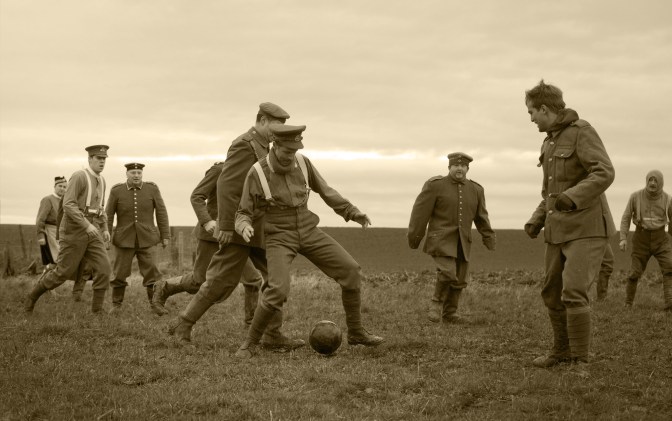
During the 1914 Christmas truce, Schirrman realized hostelling could have a more relevant and significant mission. Because of a mere few moments where opposing soldiers stood together among silenced guns, their understanding of each other became instantly humanized. He knew that hostelling could be a source for further intercultural contact where the youth of all nations may gather together and travel together. Following the end of the Great War, Schirrman gave the hostelling movement a more focused mission of bringing together people of different cultures, so that they may be less likely to take up arms against each other in the future.
* * * * *
Begin your experiences with the thrill of hostelling by contacting Hostelling International.

 Gentleman Afield