
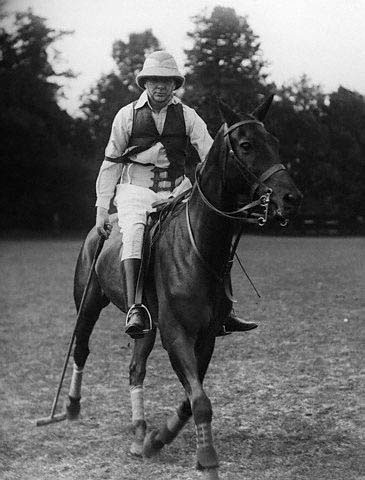
Before the dedication of Thanksgiving in 1863, our nation celebrated another grand holiday that commemorated the final retreat of British soldiers on November 25, 1783. Evacuation Day, as it was called, was a celebration of American victory over the British Empire. Defeat was nothing new for Great Britain, who has over the years lost her colonies in so many ways—from bloody rebellions to peaceful acts of passive resistance. But for Americans, it was a fresh start and the opportunity to build a new nation with new cultures and ideals. That day, the final British troop ship left New York overloaded with glowering, scarlet coated soldiers who, as they pulled from the harbor, vindictively lobbed one final cannonball at a crowd of civilians who shouted and cursed them as they left.
But even as that ship passed finally over the crest of the Eastern horizon, the indelible mark of Britannic culture was left on the people from whom they had just retreated. In no area was this more true than in the gentlemanly sports afield.
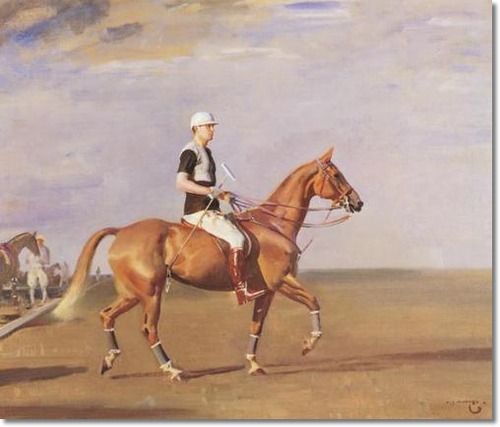
While our objection with the British was specifically with the king, the sport of kings was nevertheless part of American culture for good. Polo is a sport that is traditionally played on horseback. Players compete by riding about and swatting a grapefruit sized white ball with a mallet that appears very much like an oversized croquet mallet. The object of this game is simple—to ride one’s horse at the ball and to swat that ball through the opposing team’s goalposts. But the operation of this game is far from simple. Riding a hot-blooded polo pony in an open field amongst other galloping horses is, I can safely say, the most dangerous of endeavors in organized sport.

Polo in the United States sometimes took on a distinctly American flavor.
These days, polo is a sport that is unreasonably resource-intensive, even for the average equestrian. Maintaining a stable full of five or more polo ponies (the standard), keeping them properly fed and exercised, and shipping them to matches requires more than a small fortune. Thankfully there are alternative options for the sporting gentleman who wishes to thrill in the sport of polo without investing the king’s ransom.

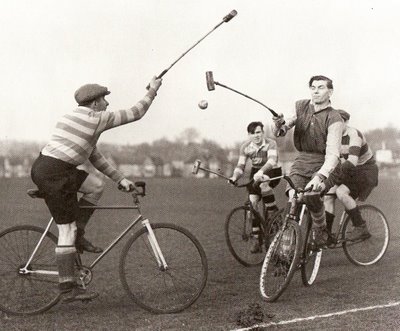
Bicycle polo is an alternative sport that began in the North of Ireland in 1891. The idea was borne in the mind of an Irishman named Richard J. Mecredy. His idea was to have a game identical to equestrian polo, but on bicycles instead. The game caught on and spread throughout mainland Europe to places like France and Germany. In fact, the game was once so popular, it was introduced as a demonstration sport at the 1908 Olympic games (Ireland winning the gold over Germany, if you care to know).
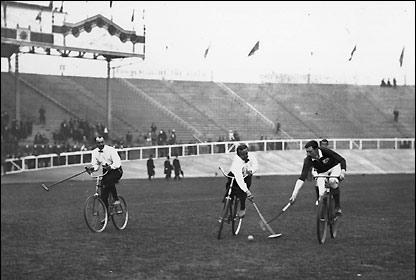
Bicycle polo has enjoyed a certain popularity throughout Europe ever since its inception, but is lately experiencing a bit of a renaissance in nations like the United States and India. Its fast pace, adventurous spirit, and universal accessibility, makes it a desirable sport—even for the most parsimonious of modern gentleman. Go to your garage, dust off that old bicycle, find yourself a mallet (a croquet mallet if you must) and go play like a king!
For further reading on possibly the most historically important polo field in the world, I recommend Winston Churchill’s The Story of the Malakand Field Force. This is Churchill’s first book, which reports his service as a cavalry trooper and polo player in Afghanistan. The accounts that it contains are eerily prescient and relevant to our current national foray into that same region.

 Gentleman Afield